
Innovation is often the product of adversity, so it is no surprise that some of the best facade design emerges from the world’s coldest environments. Smart facade design choices for cold climates balance function and form. Architects have to consider frigid winds and ever-growing blankets of snow. A good facade needs the strength to survive and the look to thrive in the unforgiving winter months.
Many modern cladding materials, aluminum, in particular, boast an incredible durability against cold climates. Their contemporary shapes, tones, and finishes pair well with the canvas of a snowy hill. These materials offer many avenues, whether you are after a look that will compliment or contrast the natural environment of the building’s surroundings.
Architects throughout history have had to cooperate with, and struggle against, nature. This is profoundly seen in the coldest climates and still holds true to the modern era of design. To celebrate the innovation that rises from the snow, and the buildings that hold fast against winter, here are some of our favorite modern facade designs for cold climates.
Smart Facade Designs for Cold Climates
The Chalet du Bois Flotté – LA MALBAIE, Québec
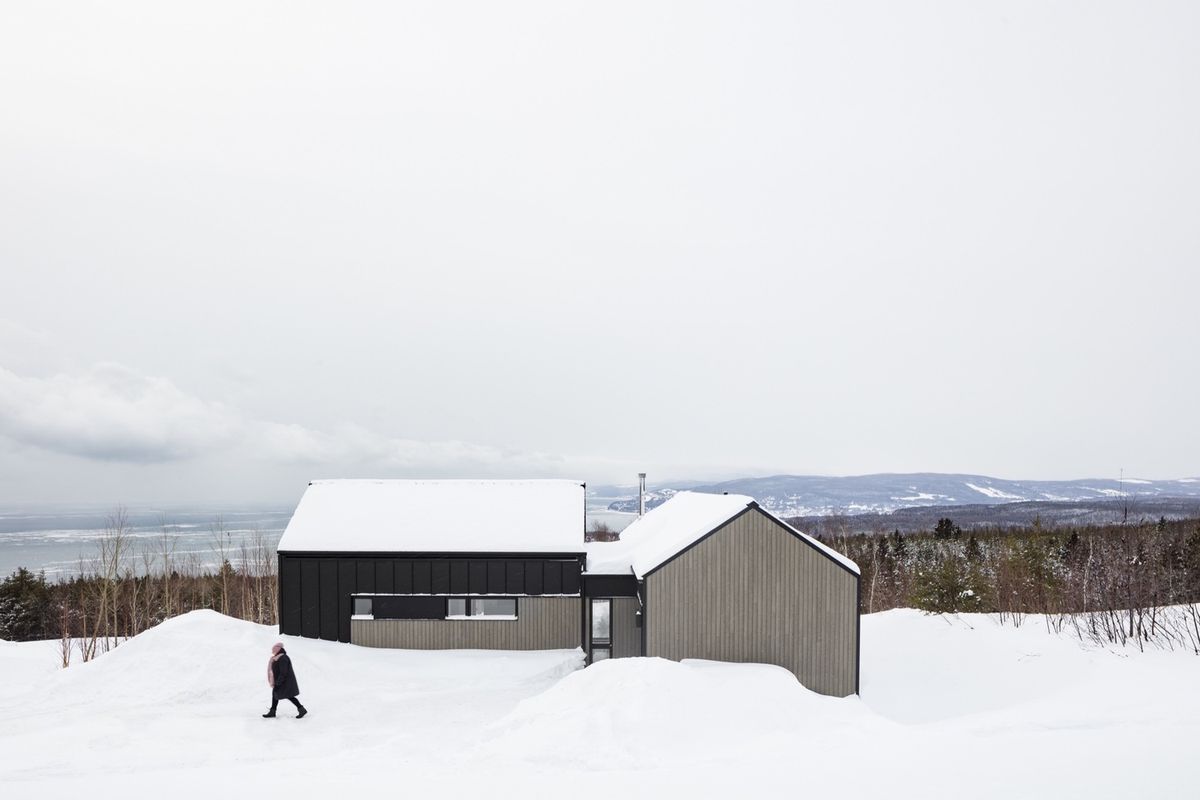
This chalet in Quebec, designed by the architects at Boom Town, graces a hill overlooking the Malbaie River. Its minimalist style matches the acres of untouched snow around it, while its metallic black siding can catch the eye from far away. Ceder, thermally modified to survive many winters, pays homage to the driftwood once used to build the area’s original homes.
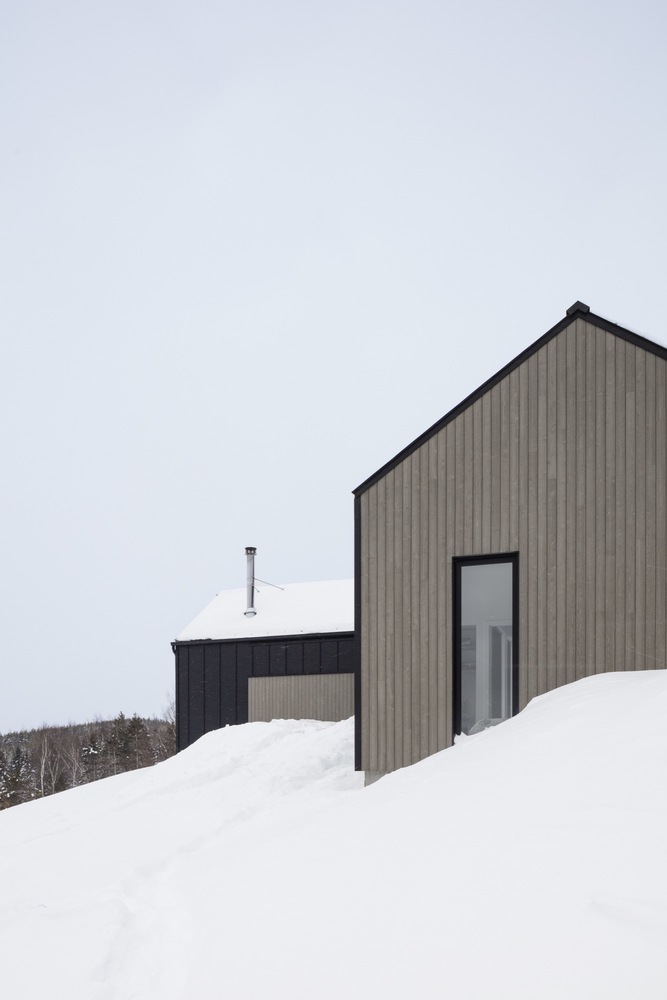
The building sports a gabled roof, a staple of the earliest settlements in the St. Lawrence Valley. This structure, developed by settlers needing a smart solution to cold–and often dire–winters, gets a facelift from modern materials and makes for a cozy weekend getaway.
Museum of the North – Fairbanks, Alaska
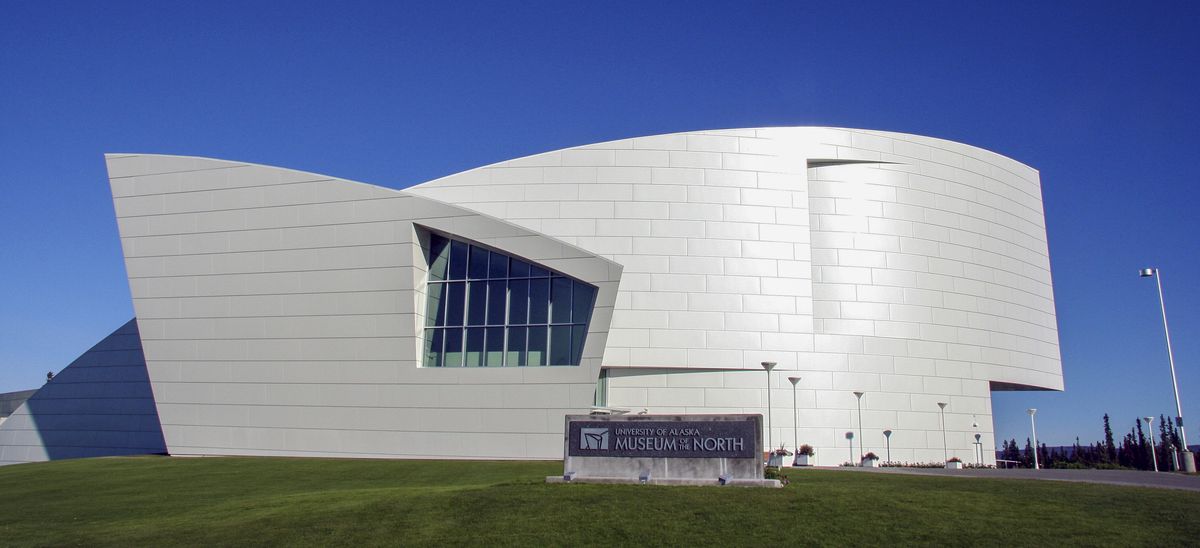
Standing between Mount McKinley, the Tanana River Valley, and the Alaska Range, the Museum of the North exists in one of America’s most frost-bound locales. This building at the University of Alaska rocks a recently updated facade that was inspired by the glaciers and coastlines of the north, in a celebration of the deep local culture.
It is clear that the designers, HGA, had fun designing this facade, and this passion translates into a building that invokes curiosity and draws in tourists from around the world. The intricate curves and flows that make up the building’s form are made possible by the flexibility of modern cladding panels.
Unique designs like this one are one of the reasons why easily fabricated cladding materials such as ACM and HPL have grown so popular for modern facade design.
The Kinii Ski Lodge – Salt Lake City, Utah

A snowy mountain is incomplete without a ski lodge. This modern facade design rests atop Powder Mountain in Utah. Its envelope is built to withstand hostile and cold conditions, as it stands at about 3000 meters above sea level.
The malleability of metallic siding allowed the original designers to play with angles, and the burnished metal has just the right gloss to pair with the natural mountain beside it. The layout draws intricacy out of simple shapes, and the Lodge provides the perfect modern comfort after a crisp day on the slopes.
Mosaic Stadium – Regina, Saskatchewan
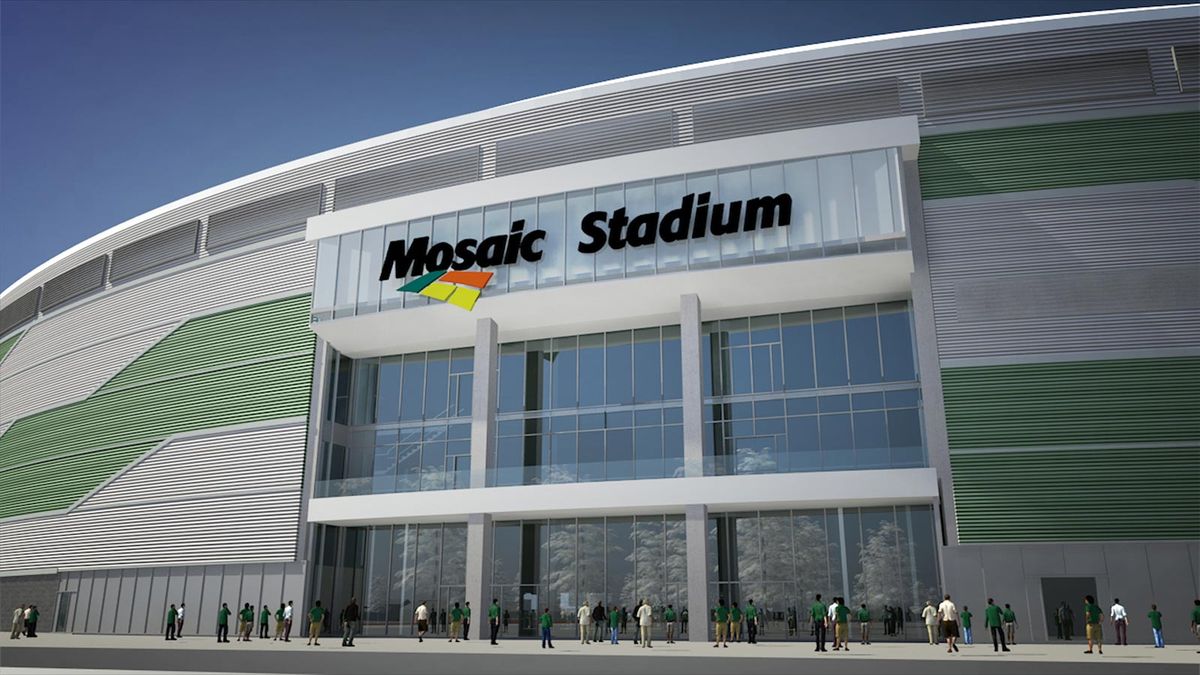
Regina is known for its brutal winters, as well as for having some of the most passionate football fans in all of Canada. For both these reasons, almost $280m went into the construction of Mosaic Stadium, home of the CFL’s Saskatchewan Roughriders since 2017.
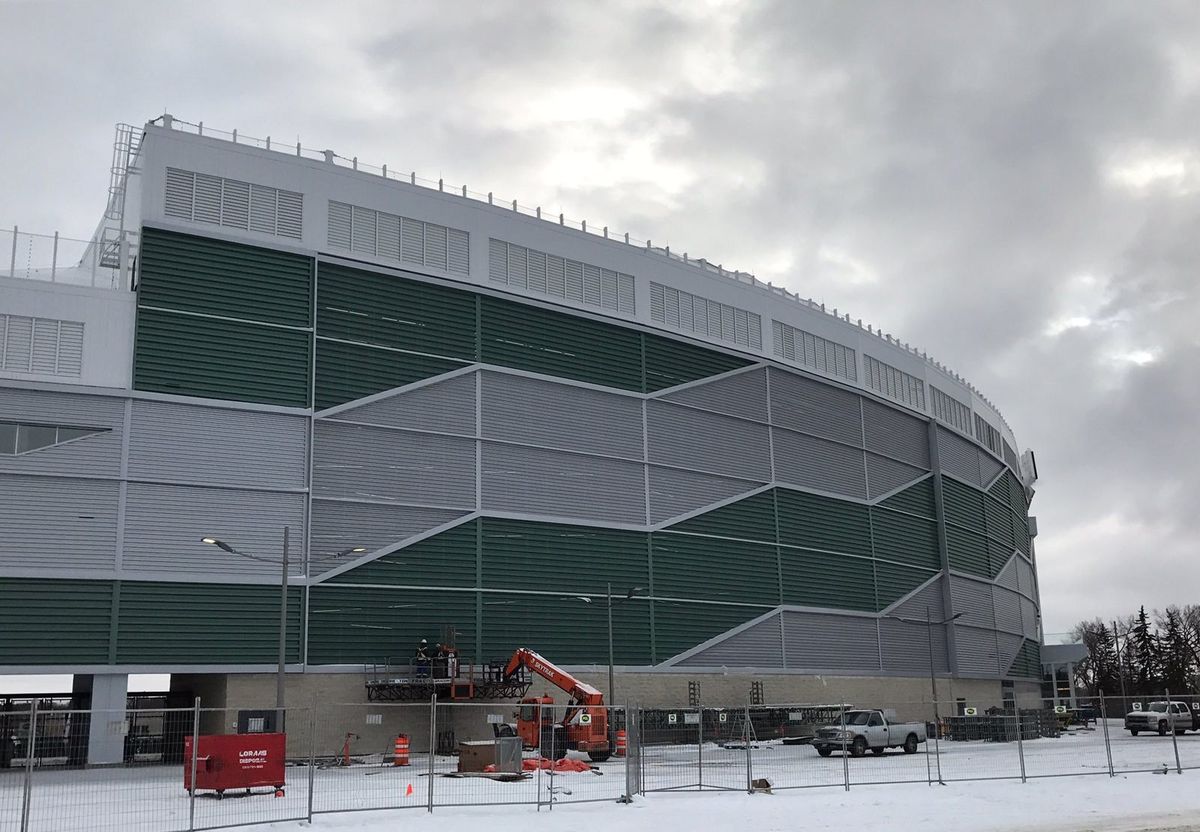
This was an ambitious project, as designers needed to create a facade that would keep fans comfortable in an open-air environment that would see use during infamously cold Saskatchewan winters. The curved roof and the sunken elevation of the lower bowl were designed for this purpose, to direct snow and high winds away from the stands.
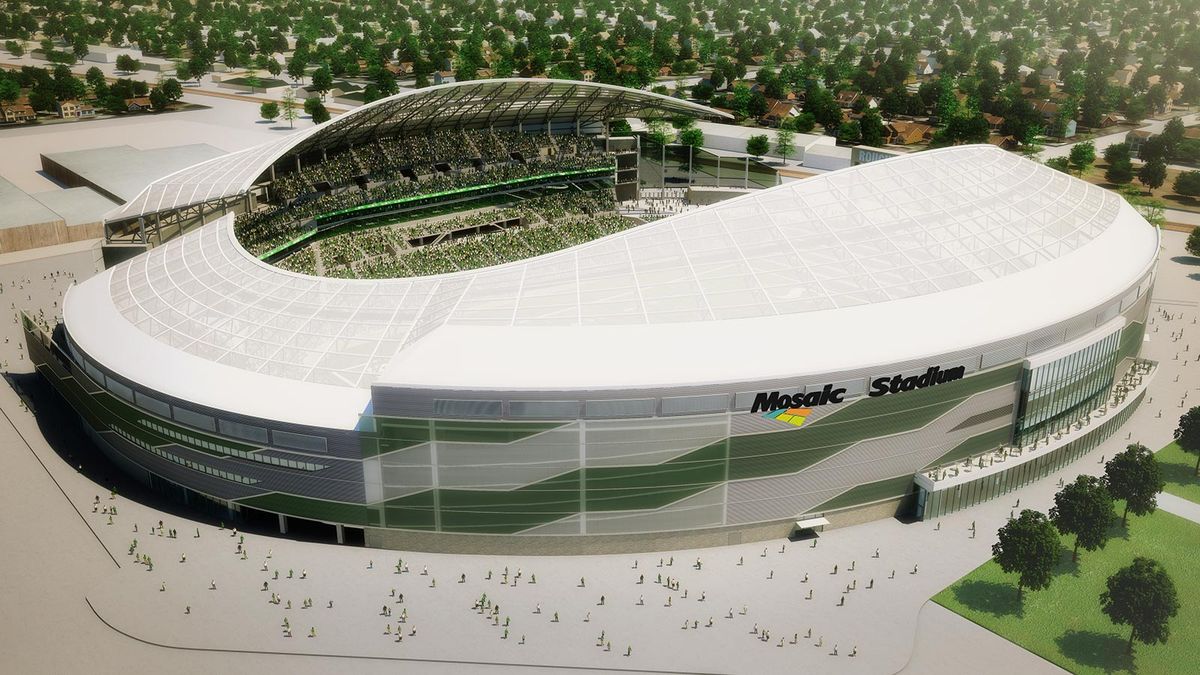
The now-famous facade, a performance of its namesake, is a mosaic of green and white. This facade design was carried out thanks to the variety of colors supported by aluminum cladding.
Princess Elisabeth Station – Antarctica
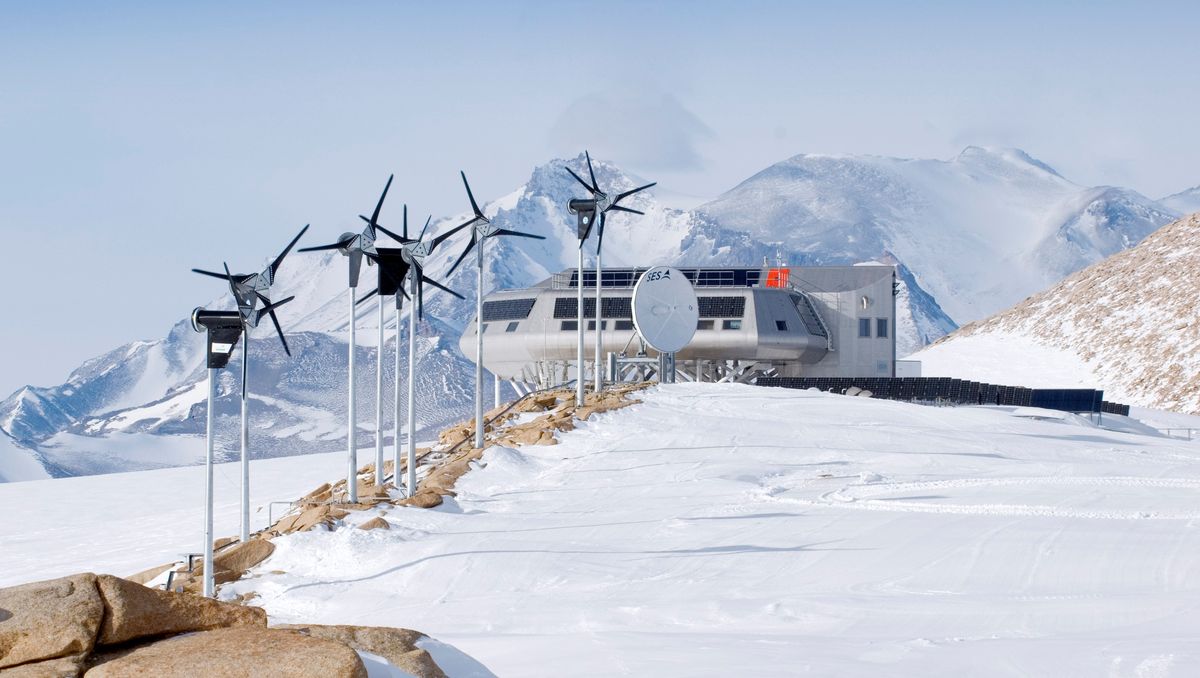
Aluminum is one of the best materials for cladding in cold climates. Princess Elisabeth Station, a research facility in Antarctica, is perhaps the greatest endorsement aluminum could have. The material was used as the primary facade element and boasts a composition that is designed to be watertight and mitigate energy loss in the unforgiving wasteland of the south pole.
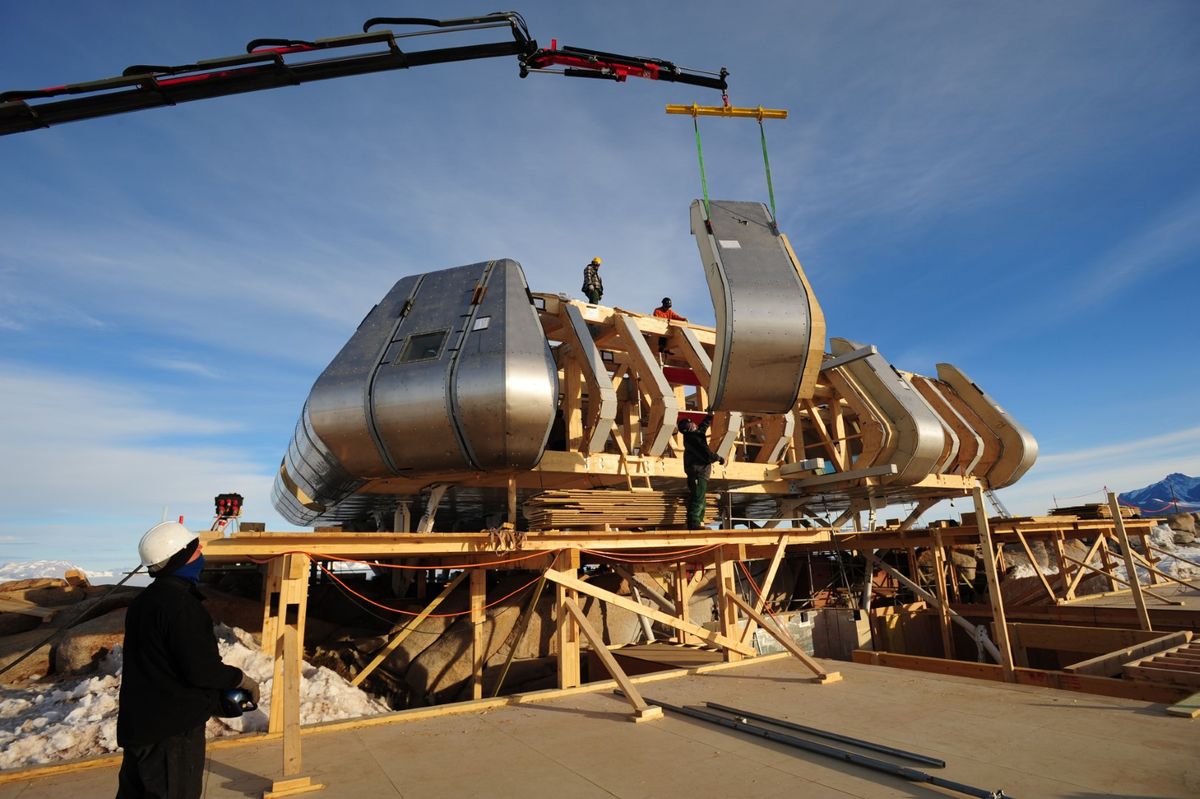
The flexibility of aluminum is showcased in a curved exterior tailored to be aerodynamic against strong winds. The glossy metal and small port windows are reminiscent of a spaceship, fitting in the out-of-this-world landscape.
Bhrathi Research Station – Antarctica
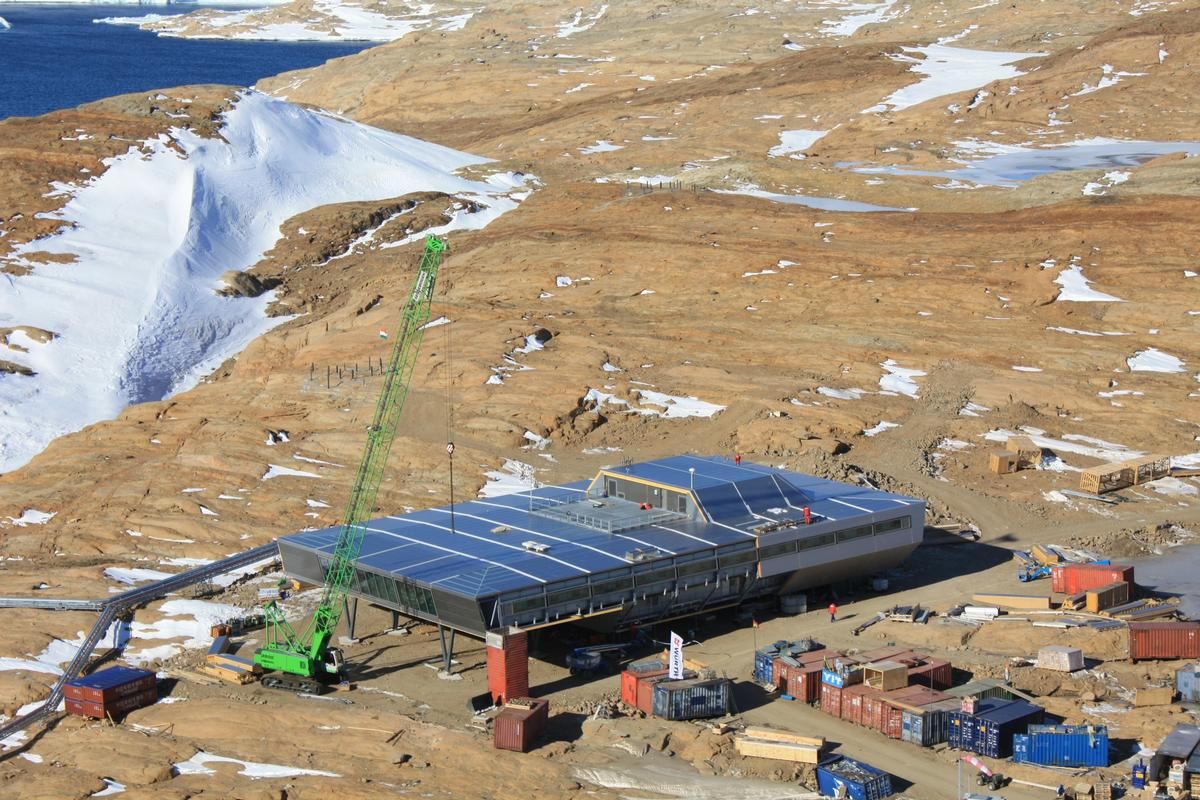
The Bharathi Antarctic Research Station looks like a spaceship in its own right, much thanks to its own aluminum facade. The exterior for this building was fabricated using recycled shipping containers, which were fabricated to panels in Germany. The facade material was chosen for its environmental sustainability, its resistance to cold temperatures, and the ease of shipping aluminum panels over long distances.
Wiedehopf Project – Springbank Road, ON
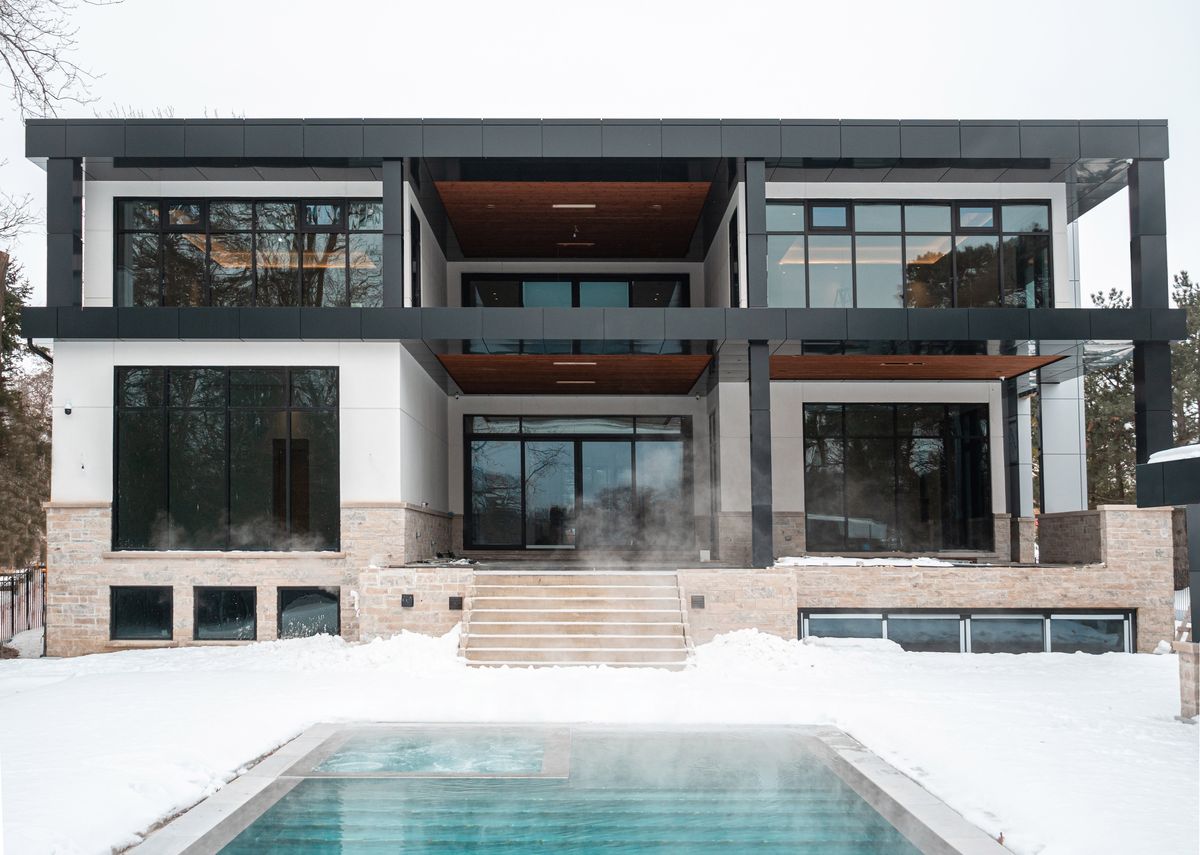
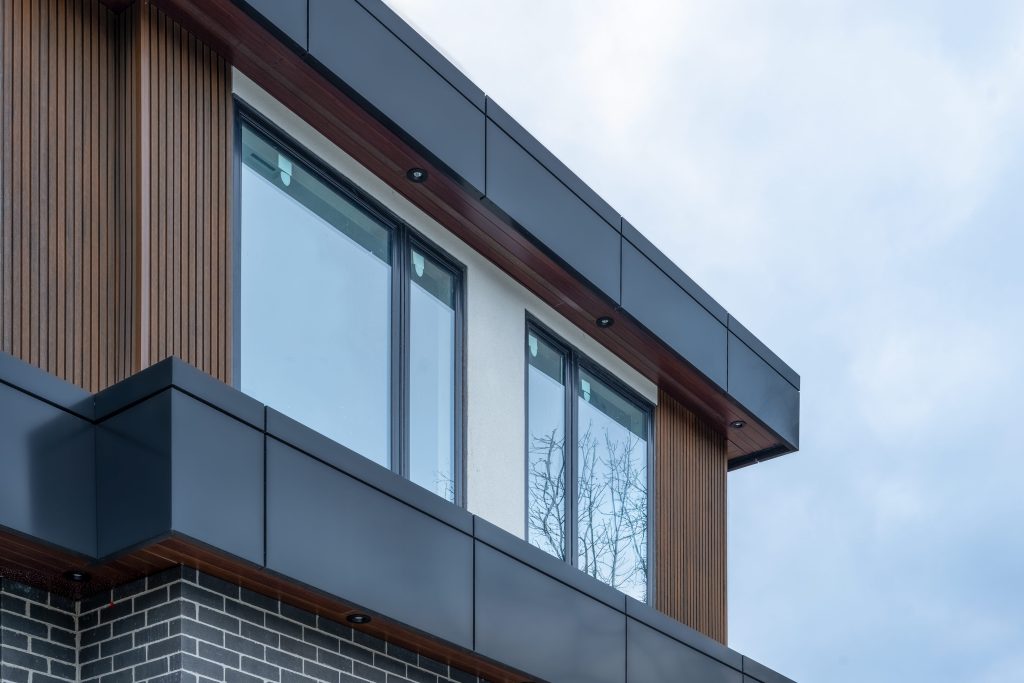
Maybe it is not as frigid in Springbank as it is in Antarctica, but we still had to approach the cladding project for this home with an understanding of cold conditions. The black ACM panels we used do not just accent the frame of the building, they also form an awning that keeps falling snow away from the window sills and rain off residents enjoying the patio.
A practical goal, keeping snow and rain further away from the building’s envelope, resulted in a unique design. This is something that happens with each new project we take on, and why we are grateful to operate in the four seasons climate of Canada. We have no choice but to consider whether in all the work that we do, which always pushes us to innovation.
Conclusion
If you are designing and constructing a facade in the GTA, cold weather will be one of the factors to consider. Fortunately, innovation in the field of architecture often occurs when designers are faced with environmental adversity.
Instead of viewing snow, wind, and freezing temperatures as roadblocks, the designers for the projects above used them as driving motivators for creating facades that are both beautiful and functional.
At Wiedehopf, we have experience facilitating cladding projects geared towards cold climates. From design to installation, we know the challenges that winter will pose to your building. Our expertise in the building makes for facades that will triumph over the cold. Aluminum being a favorite in cold climates, we provide for all your Aluminum Composite Material and Aluminum Siding needs.
If you were inspired by one of the cold climate designs we have discussed, and have ideas for your own project, we want to discuss cladding solutions with you!