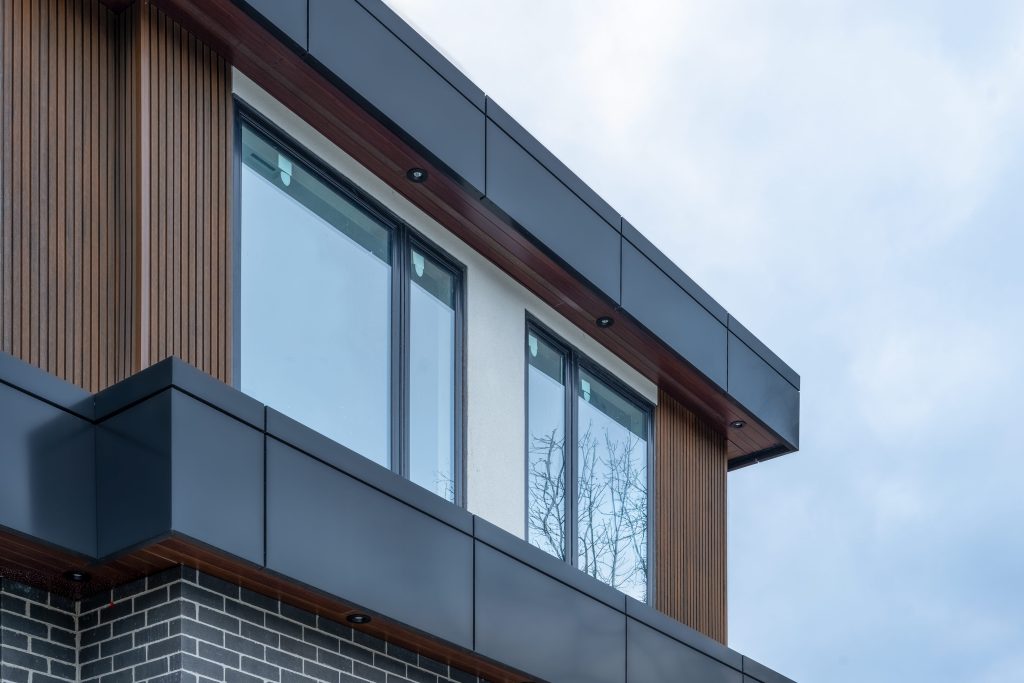

Composite wood, also known as wood composite or composite wood materials, is a type of composite wall cladding that offers a versatile and high-performance alternative to traditional solid lumber. Many homeowners and builders in the GTA and Ontario turn to these materials when looking for options that combine durability, consistency, and design flexibility, qualities that hold up especially well in Canada’s demanding climate of freeze-thaw cycles, humidity, and wide temperature swings.
This guide explains what composite wood is, explores the main types of composite wood materials, and details their best uses for home interiors and exteriors. You’ll find practical insights to help you choose the right option for your project.
What Is Composite Wood? (and Wood Composite Materials)
Composite wood refers to engineered materials manufactured by combining wood fibers, particles, strands, or veneers with adhesives, resins, waxes, or polymers. Unlike solid wood cut directly from trees, these products are created under heat and pressure to achieve specific performance characteristics.
Key advantages of composite wood materials include:
- Greater dimensional stability (less warping or shrinking)
- Improved resistance to moisture, insects, and rot
- More consistent quality with fewer defects
- Efficient use of wood resources, often incorporating recycled content
- Customizable aesthetics and performance for modern building needs
Wood composite products range from basic interior panels to advanced exterior solutions like WPC (Wood Plastic Composite or Wood Polymer Composite). They perform particularly well in Ontario, where traditional wood often struggles with seasonal weather extremes.
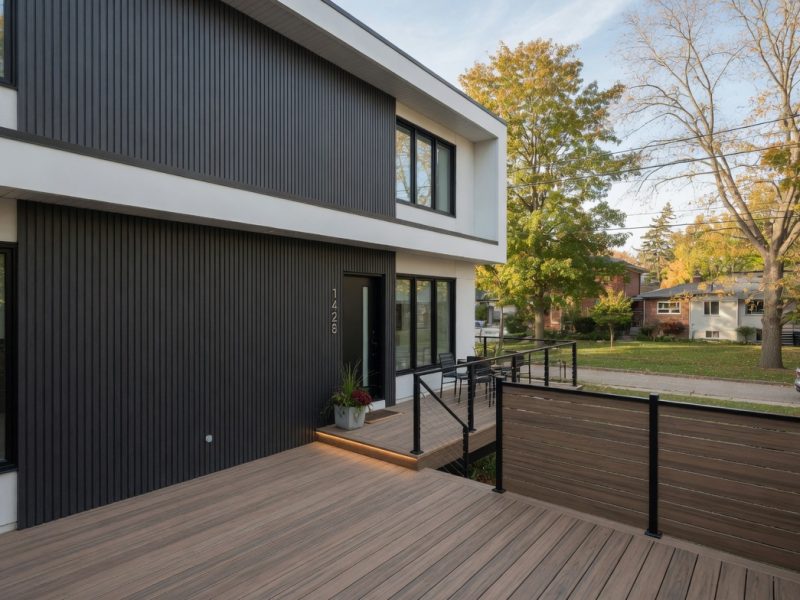
Main Types of Composite Wood Materials and Their Use Cases
Several types of composite wood exist, each suited to specific applications. Here’s a breakdown focused on practical interior and exterior uses in homes.
Particleboard (Chipboard)
Composition: Wood chips, sawdust, and particles bonded with synthetic resin and pressed into sheets.
Best Uses:
- Interior only: Furniture cores, shelving, cabinet carcasses, and non-structural panels.
- Often used as a cost-effective substrate under laminates or veneers.
Limitations: Highly susceptible to moisture swelling, so it is unsuitable for bathrooms, kitchens with high humidity, or any exterior applications. According to the USDA Forest Products Laboratory’s Wood Handbook, particleboard’s low moisture resistance makes it unsuitable for humid or exterior applications without special overlays.
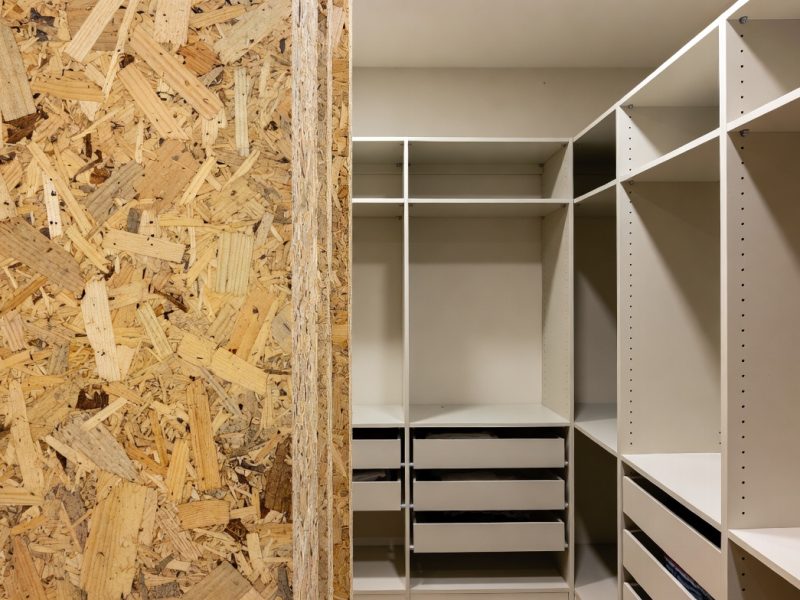
Medium-Density Fiberboard (MDF) and High-Density Fiberboard (HDF)
Composition: Very fine wood fibers combined with resin and wax, compressed into dense, smooth sheets. HDF is a denser variant.
Best Interior Uses:
- Cabinet doors, mouldings, trim, wall panels, and painted furniture.
- Flooring underlayment and decorative elements.
Exterior: Only specialized moisture-resistant grades; generally not recommended for full outdoor exposure.
Advantages: Smooth surface ideal for painting or routing intricate designs.
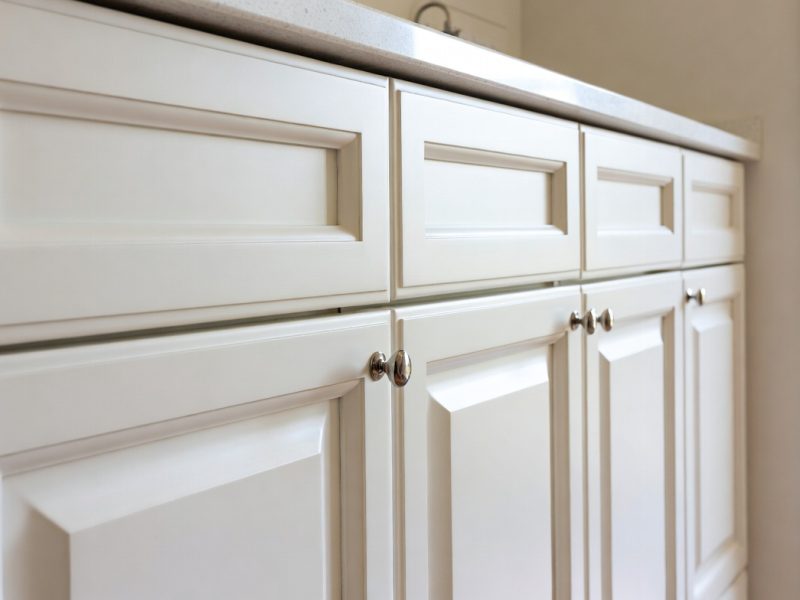
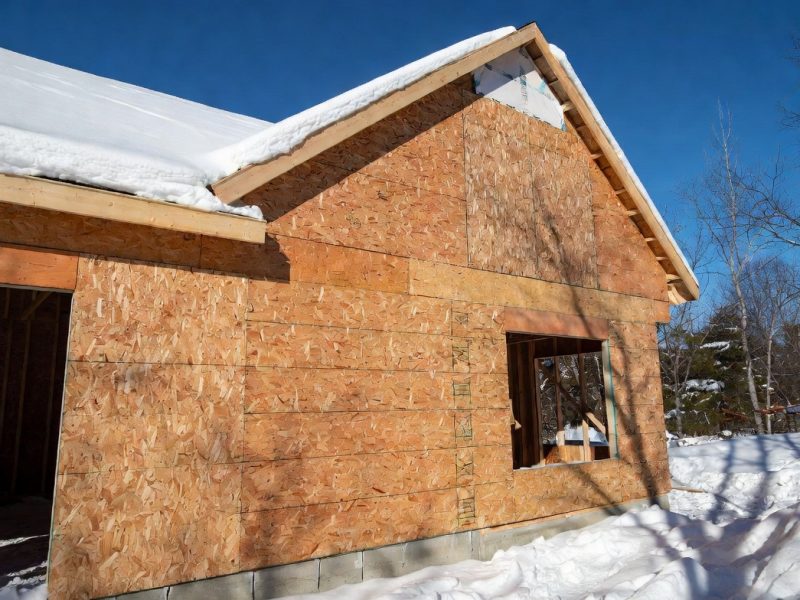
Oriented Strand Board (OSB)
Composition: Large wood strands oriented in layers and bonded with adhesives, creating a strong structural panel.
Best Uses:
- Structural sheathing for walls, roofs, and subfloors in both interior and protected exterior applications.
- Common in new home construction and renovations across Ontario.
Advantages: Excellent strength-to-weight ratio and cost-effectiveness for structural needs.
Plywood
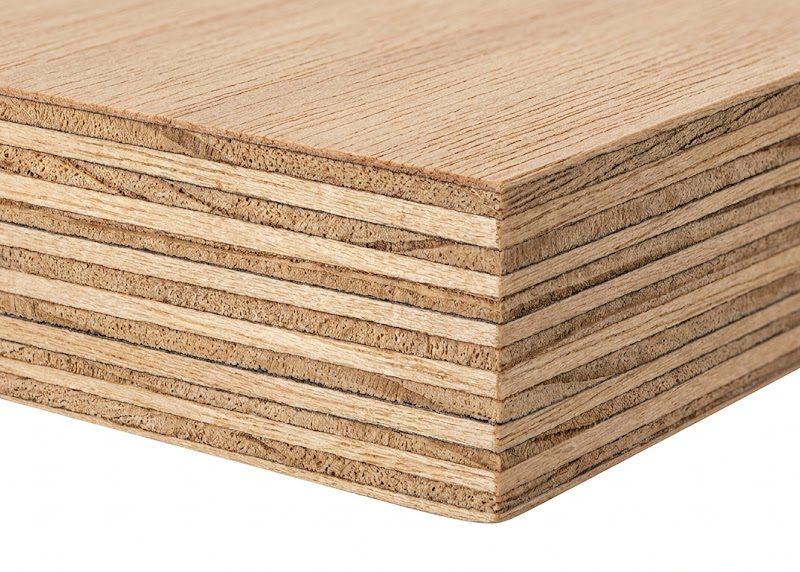
Composition: Thin wood veneers (plies) layered at right angles and glued together for strength and stability.
Best Uses:
- Interior: Cabinetry, furniture, and decorative panels.
- Exterior: Siding, sheathing, soffits, and marine-grade applications in wet areas.
- Versatile for both DIY and professional projects.
Advantages: Balanced strength in all directions and good moisture resistance in exterior grades. Read our guide about the comparison of WPC vs plywood.
Wood Plastic Composite (WPC) / Wood Polymer Composite
Composition: Blend of wood fibers or flour with thermoplastics (such as polyethylene or polypropylene), plus additives for UV protection, color, and durability. This advanced composite wood material stands out for exterior performance.
Learn about the wood plastic composite manufacturing process here.
Interior Uses:
- Feature walls, trim, and moisture-prone areas (with appropriate grades).
Exterior Uses (Ideal for Ontario):
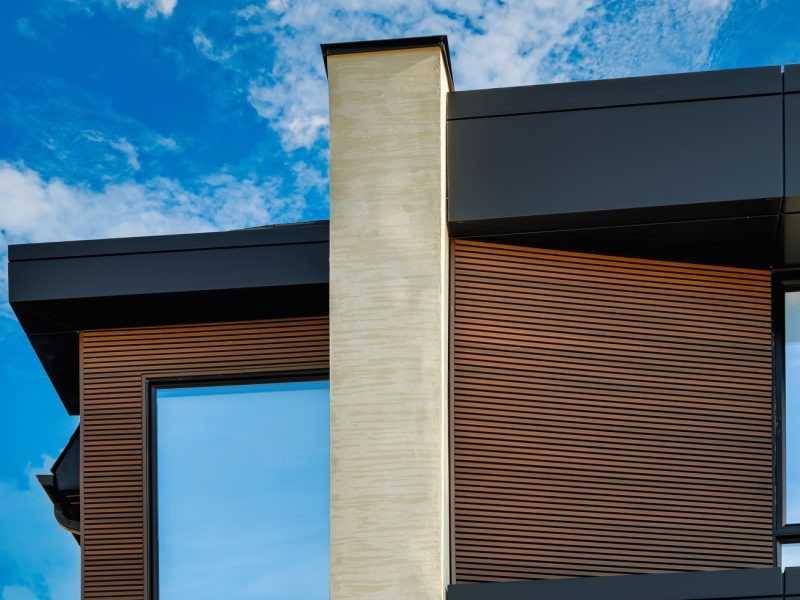
- Fluted wall panels and cladding for modern facades.
- Deck boards for patios and balconies.
- Fencing systems for privacy and boundaries.
Key Strengths in Canadian Climates:
- Superior resistance to rot, insects, fading, cracking, and moisture.
- Handles freeze-thaw cycles, rain, snow, and UV exposure exceptionally well.
- Low maintenance with a consistent appearance that mimics premium hardwoods.
WPC products, such as fluted panels for striking wall and cladding applications, deck boards, and fence profiles, provide long-term durability tailored for GTA and Ontario exteriors. USDA Forest Products Laboratory research on wood-plastic composites confirms that the polymer encapsulation of wood particles provides exceptional resistance to moisture-driven freeze-thaw damage.
Wiedehopf specializes in premium WPC solutions designed specifically for Canadian climates, offering high-quality fluted panels, deck boards, and fencing systems built for lasting performance.
Choosing the Right Composite Wood for Your Home
Consider location (interior vs. exterior), exposure to weather, desired maintenance level, aesthetics, and structural requirements. For exterior projects in the GTA and Ontario, WPC composite wood materials often deliver the best long-term performance due to their engineered resistance to local climate challenges.
A quick comparison of lifespan, moisture resistance, and maintenance can help narrow options for your specific needs.
| Type of Composite Wood | Best Use | Moisture Resistance | Lifespan (Years) | Maintenance Level | Key Advantages |
|---|---|---|---|---|---|
| Particleboard | Interior only | Low | 10–15 | Medium to High | Low cost, smooth surface |
| MDF / HDF | Interior (dry areas) | Low to Medium | 15–20 | Low to Medium | Excellent for painting & fine details |
| OSB | Structural (walls/roofs) | Medium | 20–30 | Medium | Strong, cost-effective for sheathing |
| Plywood | Interior & Exterior | Medium to High | 25–40 | Low to Medium | Versatile, good strength in all directions |
| WPC (Wood Plastic Composite) | Exterior (recommended) | Very High | 30–50+ | Very Low |
Frequently Asked Questions
Is composite wood good for exterior use in Ontario? Yes, especially WPC grades designed for moisture and freeze-thaw resistance. Traditional types like particleboard or standard MDF perform best indoors.
Can composite wood panels be used for walls and decks? Absolutely. Fluted composite wood panels excel on walls, while specialized deck boards handle foot traffic and weather on patios.
How does WPC compare to other composite wood materials? WPC offers superior exterior durability and lower maintenance than basic wood composites like particleboard or MDF.
Conclusion
Composite wood materials, from particleboard and MDF to plywood and advanced WPC, provide tailored solutions for virtually every part of a home. Understanding the different types of composite wood and their ideal uses helps homeowners and builders in Ontario make informed choices that balance performance, aesthetics, and longevity. Whether for smooth interior finishes or resilient exterior cladding, decking, and fencing, these engineered products continue to shape modern residential design.